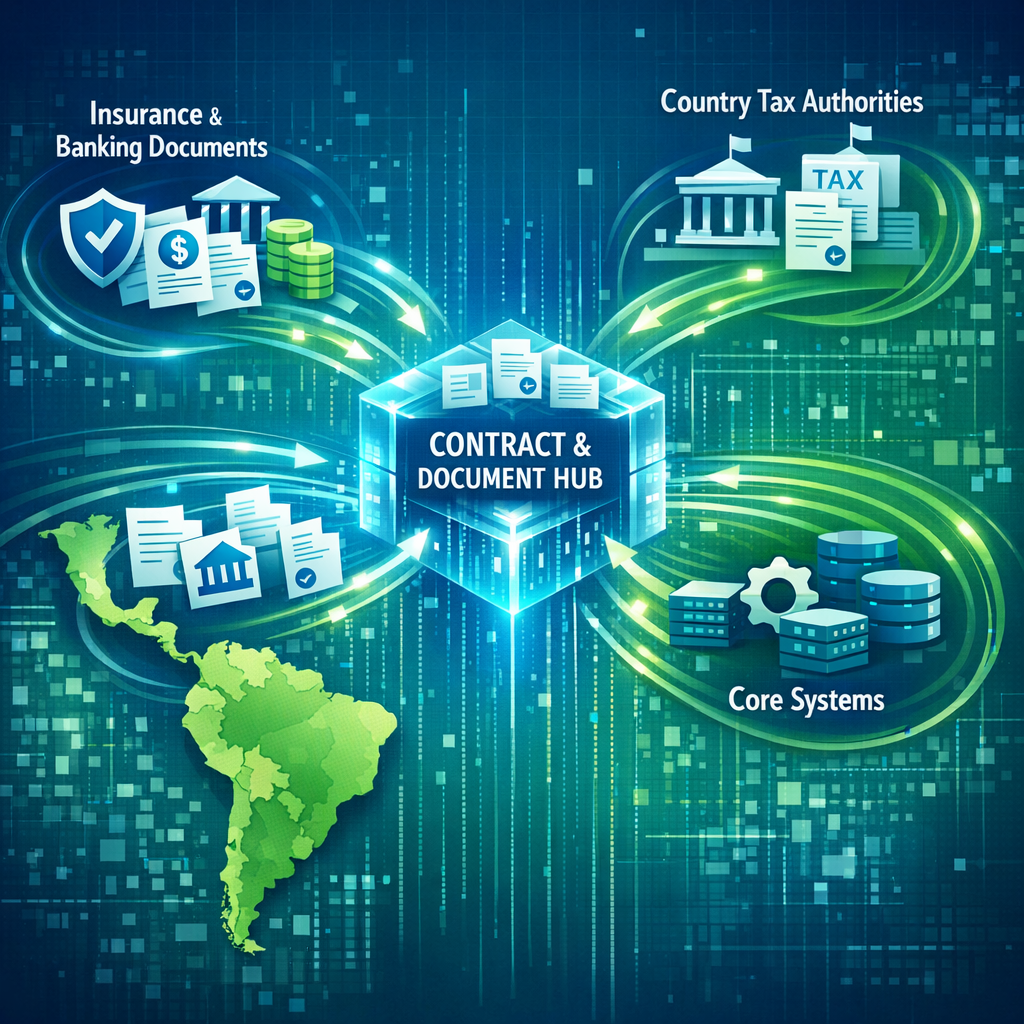
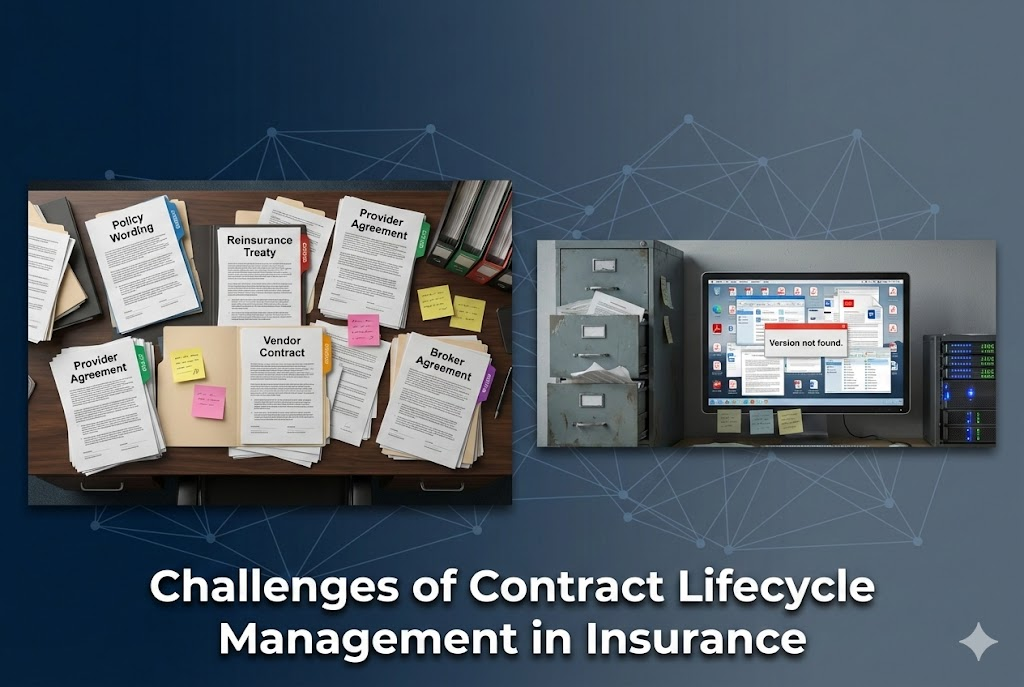
Discover why generic CLM solutions fall short for insurers and explore the challenges of managing contracts in the insurance industry.
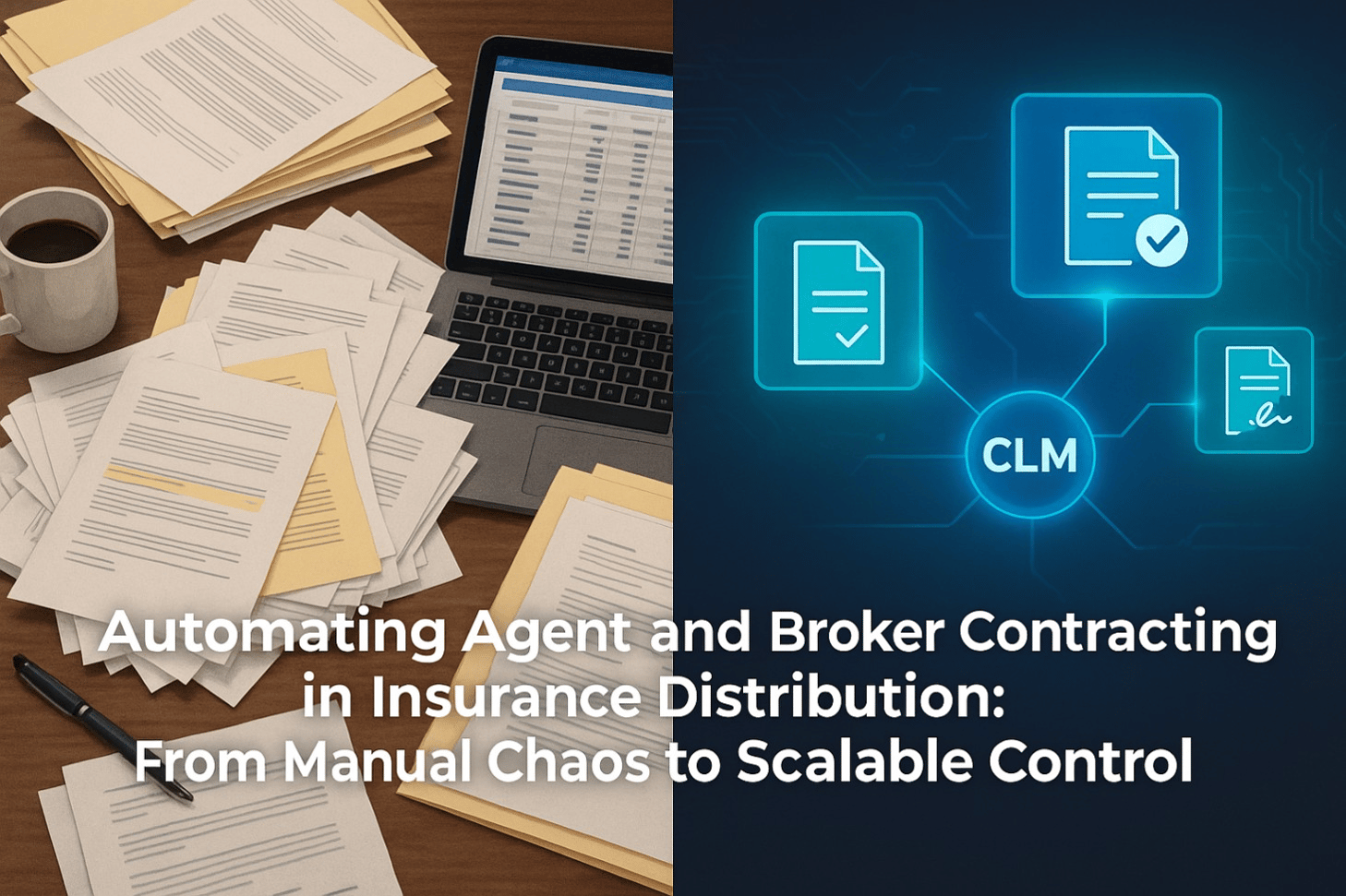
Discover how to streamline agent and broker contracting in insurance distribution with automation, reducing risks, improving compliance, and onboarding.
Most insurance carriers still manage agent and broker contracting with email threads, PDF attachments and shared spreadsheets. Producer data lives in multiple systems, contracts are edited in Word, and appointments rely on manual checks and follow-ups. It works, until it does not.
When you have thousands of producers across jurisdictions, with different lines of business, commission deals and licensing rules, this manual model becomes a structural risk. It hinders new producers from selling, complicates proving compliance, and creates disputes when commission schedules are set up incorrectly. (AgentSync)
This guide demonstrates how to transition from a manual to an end-to-end automated producer contracting process, utilizing contract lifecycle management (CLM), workflow, and digital signatures. You will see how to layer automation on top of your existing licensing and policy administration systems, rather than ripping everything out.
Throughout the article, we will reference how platforms such as DocPath bring together CLM, document generation and multichannel delivery on a single CXM and CLM platform that already serves large, regulated organizations worldwide. (DocPath)
Why Producer Contracting Is So Painful Today
If you ask distribution or licensing teams why producer contracting feels so hard, the answer usually is not “regulation is difficult”. The real problem is fragmentation.
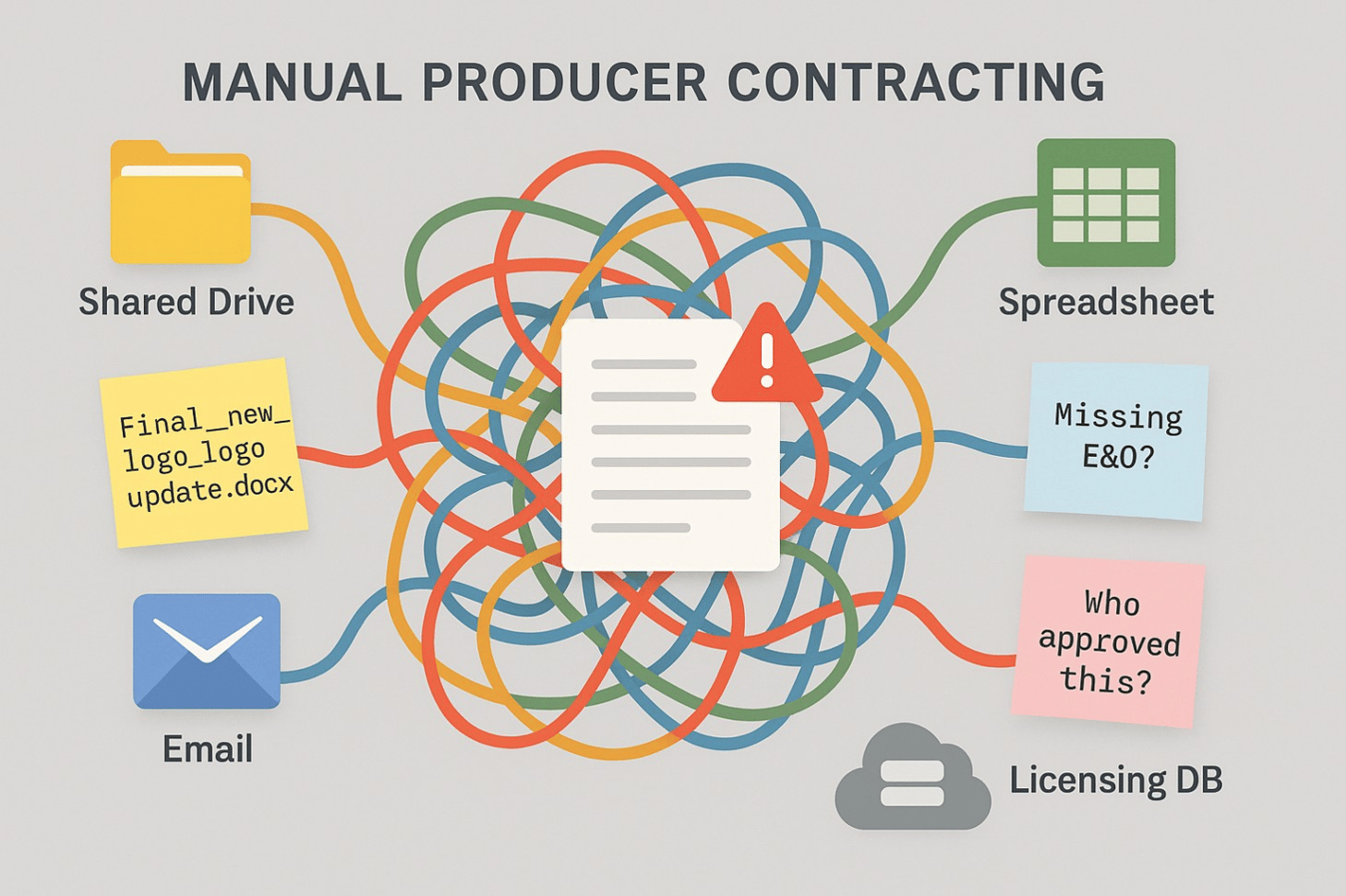
Producer data is scattered across systems
In many carriers, core producer data and documents are spread across:
- Licensing tools and state or national producer databases
- CRM or agency management systems
- Shared drives and email attachments
- Local spreadsheets that operations teams maintain to “keep track of everything”
Compliance checklists from vendors such as AgentSync highlight how many steps exist across recruiting, licensing, appointment and termination, even before you touch contracts. (AgentSync)
Contracts are hand-crafted one by one
Producer contracts are often based on:
- Old Word templates that have been copied and edited for years
- Regional variations saved as “final_v7_new_logo_update” on shared drives
- One-off amendments emailed as separate PDF addenda
Legal and distribution teams spend hours finding the “right” version and re-typing standard clauses. Without a central clause library or CLM rules, it is hard to keep language consistent across lines and regions. (global.docpath.com)
Approvals move through opaque email chains
Most approval flows still look like:
- Someone attaches a draft contract to an email.
- The message is forwarded to Legal, Compliance, Distribution, Finance and back.
- Comments are buried in attachments and side conversations.
There is no single view of where a contract is in the process, who approved which version, or why an exception was made.
Distribution is uniquely complex
Producer contracting is not like a simple vendor contract. In a typical mid to large carrier, you have:
- Thousands of independent agents, brokers, MGAs and agencies
- Multiple product lines, each with different commission structures and compliance obligations
- Multi-state or multi-country licensing and appointment rules, often aligned with the NAIC Producer Licensing Model Act or similar frameworks (NAIC)
Each combination of channel, jurisdiction and product can require different language, commission schedules and eligibility checks. Manually stitching all of this together in email and spreadsheets is asking for delays and mistakes.
Executives see the symptoms clearly:
- Sales leaders complain that new producers take weeks to become “ready to sell”.
- Compliance teams chase proof of licensing or E&O cover and worry about unappointed selling. (AgentSync)
- Operations teams carry the burden of maintaining spreadsheet trackers “just so we know who is active where”.
This is not just annoying administration. It is a structural barrier to scaling distribution safely.
The Hidden Cost and Risk of Manual Agent and Broker Contracting
On the surface, manual producer contracting seems like a people problem. You “just” need more staff or better spreadsheets. In practice, the cost and risk ripple across time-to-revenue, compliance, operations and producer loyalty.
Slow time to revenue
When contracting and appointment steps are not automated:
- New producers wait while teams gather data, run checks, and manually assemble contracts.
- Missing signatures, outdated forms or incorrect data result in more back and forth.
Research on insurance workflow automation shows that manual onboarding adds days or weeks before an agent can legally sell, while automated onboarding can reduce cycle times by validating licenses in real time and routing contracts directly to a digital signature. (certinal.com)
Every week a high-potential producer cannot sell is lost premium and lost momentum.
Compliance and regulatory exposure
Regulators expect carriers to ensure that anyone selling on their behalf is properly licensed, appointed and covered by errors and omissions (E&O) insurance. NAIC guidance on producer licensing and appointments makes it clear that insurers must maintain accurate records and appointments where required. (NAIC)
Manual contracting creates several risks:
- Producers may start selling before all licensing and appointment checks are complete.
- It may be difficult to prove who approved which terms, especially across email chains.
- Inconsistent contract language between regions or product lines can create gaps versus regulatory expectations.
Compliance checklists for agencies and carriers regularly warn that incomplete licensing records, missed renewals, and unlicensed sales can lead to fines, remediation work and reputational damage. (AgentSync)
Operational drag and errors
Operationally, manual contracting is expensive:
- Producer data is re-keyed into multiple systems: licensing, CRM, compensation, policy admin.
- Commission schedules are manually configured and cross-checked, which invites errors.
- Retroactive corrections to commission mistakes consume Finance and Operations time and strain producer relationships.
Case studies of insurance contract management platforms report reductions of up to 90 percent in manual work and dramatic cuts in approval time when workflows and data exchange are automated instead of being handled with email and spreadsheets. (2Base Technologies)
Strained relationships with distributors
Producers choose where to place their business. When contracting is slow, opaque or inconsistent:
- Agencies experience “churn risk” during contracting. They may walk away or favour carriers who make onboarding easier. (AgentSync)
- High-potential brokers perceive the carrier as hard work and allocate more volume to competitors with smoother digital onboarding.
- Distribution managers lose credibility internally if every new relationship requires manual heroics.
Doing nothing locks carriers into higher costs, higher compliance risk and weaker producer loyalty. The opportunity is to treat producer contracting as a strategic workflow that deserves the same automation attention as claims or policy servicing.
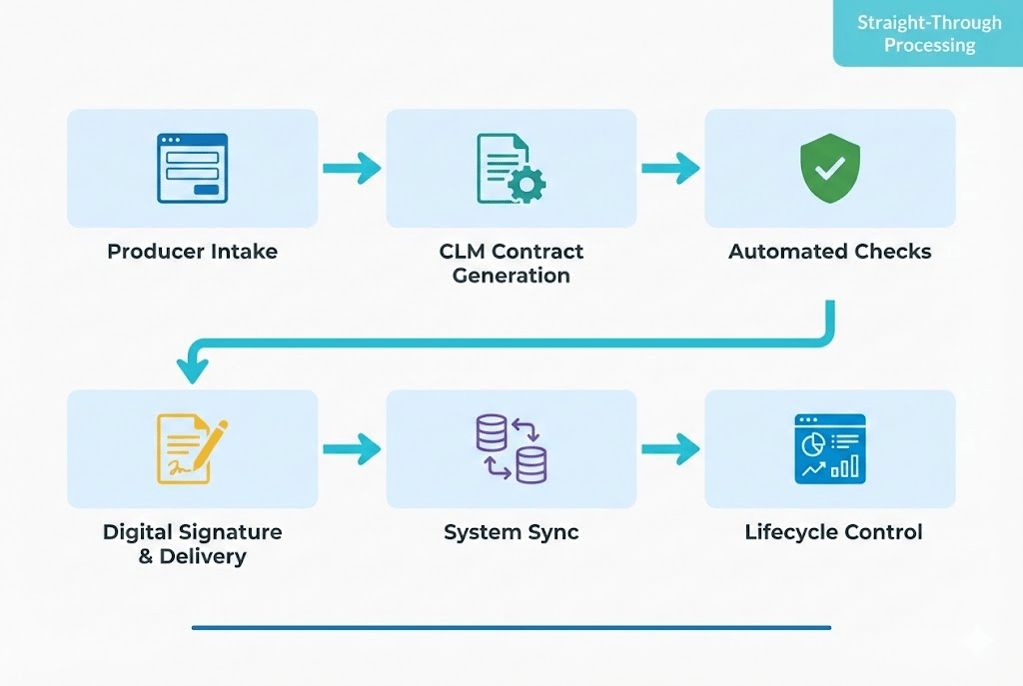
What an Automated Producer Contracting Process Looks Like
Before you buy technology, it helps to picture the target state. In this context, “producer contracting” covers everything from a producer’s initial application to a signed appointment and commission agreement, and later updates and renewals.
An automated flow typically looks like this.
1. Producer intake
- A new producer applies via a structured online form or is nominated by a distribution partner.
- The form captures key data once and validates it, where possible, against national or state sources. Leading onboarding practices recommend allowing producers to self-serve their own data to minimize manual re-entry. (AgentSync)
2. CLM-driven contract package generation
- Producer data flows into a CLM-driven workflow.
- Rules in the CLM select the correct contract template and clause set based on line of business, region, channel type, producer status (captive, independent, MGA) and risk factors.
- The platform automatically assembles the contract package, including commission schedules and required disclosures.
Both specialist CLM vendors and DocPath describe this as the core of contract lifecycle management: rules-based template selection, clause management and document generation from a central repository. (icertis.com)
3. Automated checks and approvals
Before anything is sent to the producer, the workflow runs automated checks:
- Licensing and appointment status, including state or national databases where available. (NAIC)
- E&O coverage, sanctions and background checks through existing tools or external providers.
- Internal policy checks, such as conflicts of interest or credit criteria for certain products.
Exceptions or high-risk cases can be routed to Legal, Compliance or Distribution for review inside the CLM workflow, rather than in separate email chains.
4. Digital signature and multichannel delivery
- Once approved, contracts are delivered via email, secure portal, SMS or messaging apps, depending on your CXM strategy.
- Producers review and sign using legally recognized electronic signatures backed by audit trails and timestamps. In most jurisdictions, electronic signatures are enforceable when they comply with frameworks such as eIDAS in the EU and ESIGN and UETA in the US. (European Commission)
Platforms such as DocPath CLM and CXM combine document generation, digital signature and multichannel communication, so the same engine that produces a contract can also send commission statements or notices later on. (DocPath)
5. Synchronization with core systems
On signature, the workflow:
- Updates producer master data with finalized contract attributes.
- Sends relevant fields to licensing and appointment systems.
- Links contract data to commission or compensation platforms.
- Updates CRM or policy admin with producer status and relationships.
This is where integration matters. Insurance automation guides stress that real value appears when CLM is connected to existing systems, not when it lives as another silo. (certinal.com)
6. Ongoing lifecycle control
From there, the CLM acts as the control center:
- A central repository holds all producer contracts, addenda and approvals.
- Standard templates and clauses apply across channels and regions, with controlled local variations. (global.docpath.com)
- Smart alerts flag upcoming renewals, expiries or review milestones.
- The same CXM layer delivers commission statements, product updates and compliance notices to agents and brokers.
That is what “straight-through producer contracting” looks like in practice.
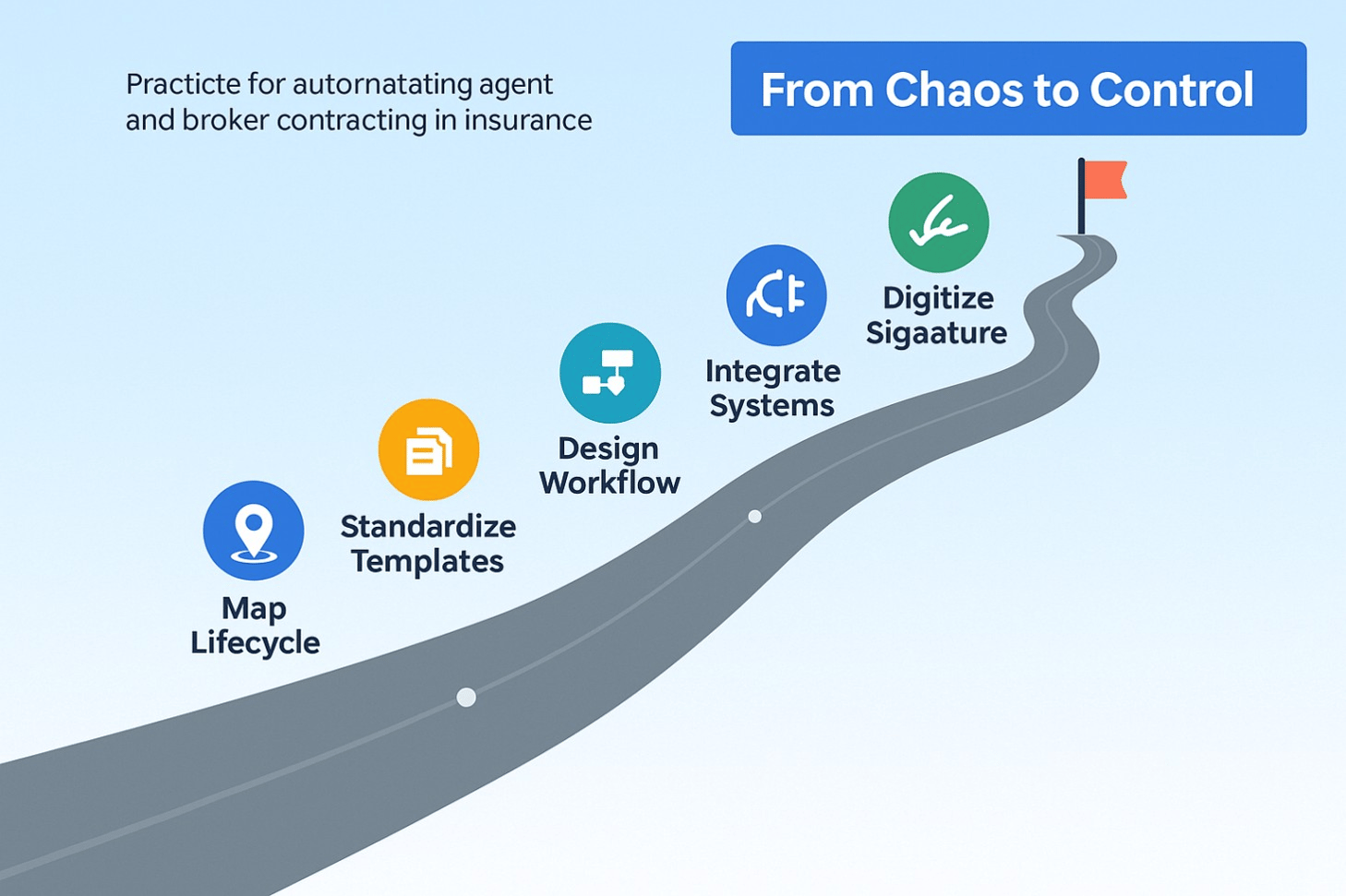
A Practical Roadmap to Automating Agent and Broker Contracting
You do not need to automate everything at once. The most successful programs follow a staged roadmap that starts with understanding the producer lifecycle, then introduces CLM and workflow, where it has the highest impact.
Step 1 – Map your producer lifecycle and stakeholders
Start by mapping the full producer relationship, not only the initial contract.
A typical lifecycle looks like:
Recruit → Vet → Contract → Onboard → Manage → Expand → Terminate
For each stage, document:
- Which documents are used, from applications and contracts to addenda, commission schedules and notices.
- Which teams own each step, such as Distribution, Legal, Compliance, Finance, Operations and IT.
- Which systems are touched: licensing and appointments, CRM or agency management, policy administration, compensation and learning platforms.
Many carriers find that a simple journey map on a page reveals duplicated checks, unclear ownership and high-risk handoffs. That map becomes your reference for where automation can deliver the most value.
Step 2 – Standardize your producer agreement templates and clauses
Before you automate, you need to reduce variability.
Focus on:
- Cutting down the number of templates and “custom one-offs”.
- Defining clear variants by channel, region, line of business and producer type (captive vs independent, MGA vs retail agent).
Then design a clause library that covers:
- Regulatory clauses and compliance obligations
- Conflicts of interest, data protection and privacy language
- Termination, clawback and commission adjustment provisions
Modern CLM tools, including DocPath CLM, are designed to manage templates and clause libraries centrally while still allowing controlled local variations. (global.docpath.com)
Doing this work up front avoids automating chaos. It also makes it easier for Legal to keep language aligned with regulatory expectations across jurisdictions.
Step 3 – Design your workflow and data model
Next, design the standard workflow for a producer contract in your CLM.
At a minimum, define:
- Intake of the producer or agency information
- Automatic checks for licensing, appointments, E&O and sanctions
- Routing rules to Legal, Compliance, Distribution and Finance for approvals
- Signature steps and activation
- Notifications and alerts for key milestones (for example, renewals, reviews)
In parallel, standardize the data elements that must travel between systems:
- Producer identifiers and hierarchies
- Lines of authority, license states and effective dates
- E&O policy details
- Commission plans and payment hierarchies
Industry guidance on CLM emphasizes that a clear data model is essential if you want to analyze contract performance, detect risk and support C-suite oversight later. (icertis.com)
In most CLM platforms, workflows are rules-driven. You can configure routing by region, premium volume, product or risk level and allow the CLM to trigger document generation, checks and alerts automatically.
Step 4 – Connect CLM to licensing, CRM and compensation systems
In insurance, integration is where automation moves from theory to real value. CLM should not sit in a vacuum.
Prioritize connections to:
- Licensing and appointment systems, so eligibility can be checked in real time and appointments issued or updated without manual re-keying. (NAIC)
- CRM or agency management platforms, so producer records stay consistent and sales teams see accurate status.
- Commission and compensation systems, so contract terms and commission plans are linked and can drive correct payment set-up.
Common integration patterns include:
- API-based integration for real-time validation and updates.
- File-based or batch integration where core systems are older or mainframe-based.
Analysts and vendors consistently report that enterprises get the most return from CLM when it is integrated with surrounding systems, not run as a stand-alone tool. (Conga)
DocPath explicitly positions its platform as an integration-friendly digital layer that can sit on top of legacy document and communication systems, rather than forcing a rip-and-replace of existing core platforms. (DocPath)
In practice, many insurers start with one or two critical integrations, usually licensing and compensation, and then add CRM or policy admin connections in later phases.
Step 5 – Digitize signature and multichannel delivery for producers
Digitizing signature and delivery removes friction precisely where producers feel it most.
Aim for a model where producers can:
- Receive contracts on their phone or laptop via email, text message or secure portal.
- Review and sign with a recognized electronic signature in a few clicks.
- Receive automated reminders for unsigned contracts and upcoming expiries.
Electronic signature vendors and legal guidance confirm that, when implemented correctly, e-signatures are legally binding in key markets such as the EU and US, as long as identity, intent and integrity can be demonstrated with reliable audit trails under regulations such as eIDAS and ESIGN. (European Commission)
Within a platform like DocPath, the same CXM and digital signature capabilities you use for producer contracts can later deliver:
- Commission statements and adjustments
- Product change announcements
- Compliance notices and attestations for agents and brokers (DocPath)
That consistency strengthens your overall producer experience.
Step 6 – Roll out with governance, KPIs and change management
Technology alone will not fix producer contracting. You need governance and measurement.
Clarify:
- Who owns producer templates and clause libraries (usually a joint group from Distribution, Legal and Compliance).
- How changes to contract language and commission terms are requested, reviewed and approved.
- How exceptions are handled and recorded.
Define KPIs such as:
- Time from producer application to active appointment
- Percentage of contracts processed touch-free through the standard workflow
- Error rate in commission setup
- Number of compliance incidents related to licensing or E&O gaps
Real-world CLM implementations in insurance and other sectors have reported contract cycle time reductions of 40 percent or more when governance, automation and analytics are combined. (Conga)
Start with one distribution channel, product line or region as a pilot, refine the workflow, and then scale across the producer portfolio.
From Spreadsheets to Straight-Through Producer Contracting: A Mini Case Study
Consider a mid-to-large carrier with more than 5,000 active producers across multiple states or countries. The starting point is familiar:
- Contracting is handled through shared mailboxes and spreadsheets.
- Different regions use their own contract templates and approval practices.
- Licensing checks are performed in separate tools, with results manually tracked.
- Commission plans are configured by hand in the compensation system.
The transformation journey
The carrier decided to modernize producer contracting using a CLM and document automation platform.
- MAPPED THE PRODUCER LIFECYCLE AND STAKEHOLDERS
They brought together Distribution, Licensing, Legal, Compliance, Finance and IT to map the full producer lifecycle and identify points of friction and risk. - RATIONALIZED TEMPLATES AND BUILT A CLAUSE LIBRARY
Legal reduced more than 30 regional templates down to a small set of standard agreements and variants, backed by a central clause library with regulatory, data protection and commission terms. - IMPLEMENTED CLM WITH AUTOMATED WORKFLOWS
The carrier deployed CLM to generate contracts based on rules, manage approval workflows and store all contracts and approvals in a central repository. This mirrors patterns seen in public CLM case studies, where contract centralization improves compliance visibility. (evisort.com) - INTEGRATED WITH LICENSING AND COMPENSATION SYSTEMS
Licensing status is now checked automatically before contracts go out, and final contract data flows directly into the compensation platform so that commission schedules are configured from approved terms rather than manual interpretation. - ROLLED OUT DIGITAL SIGNATURE AND MULTICHANNEL DELIVERY
Producers now receive contract packages via email or secure portal and sign electronically, with automatic reminders and full audit trails.
Directional results
Within a year, the carrier saw directional improvements similar to outcomes reported in insurance contract management case studies: (2Base Technologies)
- A 40 to 60 percent reduction in time from producer application to first active appointment in pilot regions.
- A significant drop in manual data entry errors in commission set-ups, reflected in fewer adjustment requests and disputes.
- Faster response to regulator and auditor requests because every producer contract, approval and version history is stored in one system rather than scattered across mailboxes.
- Improved producer satisfaction, reflected in feedback that onboarding felt “clearer and more predictable” and in higher producer activation rates.
This kind of step change is precisely what CLM plus document automation platforms, including DocPath, are designed to support: centralizing contracts, automating workflows, integrating with core systems and delivering communications through the channels your producers actually use. (DocPath)
Getting Started: First Moves to Automate Producer Contracting
If you recognize the pain points in your own producer contracting process, you do not need to redesign everything at once. Start with a few deliberate moves.
Recap the core messages
- Manual producer contracting is slow, risky and unscalable at the distribution scale.
- Automation does not mean replacing your core administration or licensing systems. It means wrapping them with a CLM-driven process that connects licensing, CRM and compensation into a controlled, auditable workflow. (certinal.com)
A simple action checklist
- Assemble a cross-functional group with leaders from Distribution, Legal, Compliance, Operations and IT.
- Document your current producer lifecycle and pain points on a single page, including key documents, systems and handoffs.
- Identify a high-impact pilot area, such as new agents in one region or one line of business where delays are most visible.
- List the must-have integrations for that pilot, usually your licensing or appointment tool plus the commission system.
- Shortlist CLM and document automation platforms that can deliver:
- Strong workflow and template control
- Integrated digital signature and multichannel delivery
- Proven ability to integrate with existing insurance stacks
- Strong workflow and template control
DocPath’s CXM and CLM solutions are one example of this type of platform, combining document generation, contract lifecycle management and multichannel communication on a single, integration-friendly foundation. (DocPath)
If you want to explore how to automate producer contracting without disrupting your existing distribution systems, DocPath’s team can help you design a phased roadmap that fits your channels, regions and risk appetite.