
Discover how Customer Communications Management (CCM) enhances brand consistency, compliance, and customer experience for enterprise companies. Learn...
Discover how to choose the right Document Management System (DMS) for enterprises in Latin America, focusing on regulatory compliance & cloud deployment.
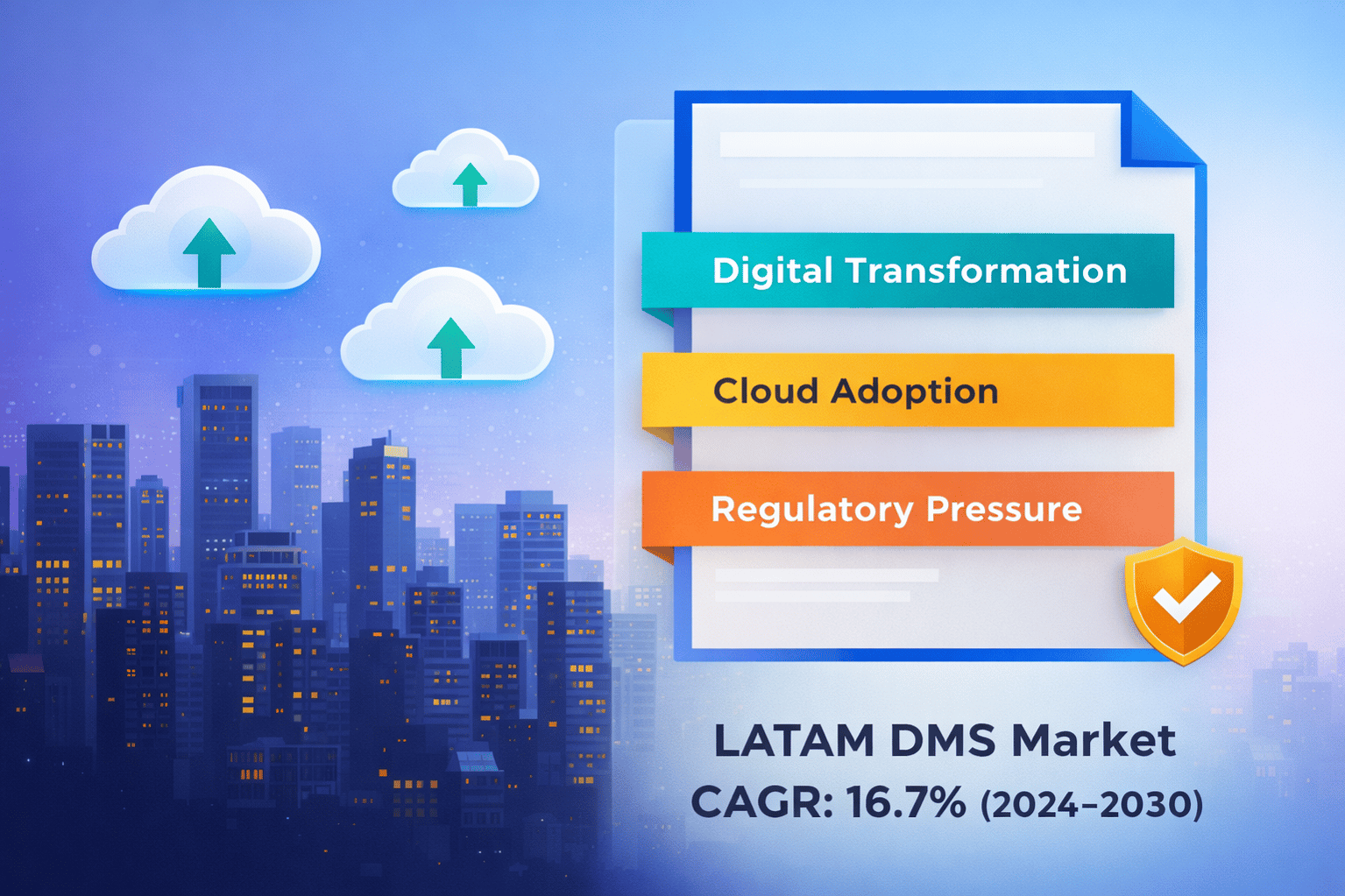
Latin America's document management system (DMS) market generated USD 410.9 million in 2024 and is projected to surpass USD 1 billion by 2030, growing at a compound annual growth rate of 16.7%. Enterprises across banking, insurance, retail, and manufacturing are no longer simply eliminating paper. They are investing in interactive, AI-driven document ecosystems that turn routine communications into customer engagement tools.
Yet the region's unique regulatory patchwork, dual-language requirements, and wide variation in digital infrastructure make vendor selection far more complex than in North America or Europe. This guide breaks down what to look for, what to avoid, and how DocPath can support enterprises operating across the region.
Quick Summary: What Is Enterprise Document Management in Latin America?
Enterprise document management in Latin America is the automated handling of business-critical documents, from creation through distribution and archival, across regulated industries and multi-country operations, with growing emphasis on cloud deployment, AI-powered automation, and compliance with regional data-protection laws.
The LATAM DMS landscape is defined by several converging forces. According to DocPath's 2025 annual overview, more than 70% of Latin American companies adopted cloud-based document management systems by the end of 2025, driven by scalability needs, remote-access demands, and the urgency to reduce operating costs.
Key takeaways to keep in mind throughout this guide:
- Market trajectory: Latin America is the fastest-growing regional DMS market globally, outpacing North America and Europe in growth rate.
- Cloud dominance: Cloud DMS now accounts for the majority of new enterprise deployments across the region.
- Top adopting sectors: Banking, insurance, healthcare, government, manufacturing, and logistics lead adoption.
- Regulatory pressure: National data-protection laws in Brazil, Mexico, Colombia, Chile, and Argentina are tightening, making compliance-ready DMS selection non-negotiable.
- Accessibility rising: The European Accessibility Act and ESG commitments are pushing accessible PDF output higher on enterprise requirements lists.
Why Is Latin America a High-Growth Market for Document Management?
Latin America is the fastest-growing regional DMS market globally, driven by accelerating digital transformation, tightening data-privacy regulations, and the rapid expansion of cloud infrastructure in Brazil, Mexico, Colombia, and Argentina.
The numbers tell a compelling story. The global DMS market was valued at USD 7.68 billion in 2024, with Latin America accounting for roughly 5.4% of total revenue and growing at a 16.7% CAGR through 2030, the highest regional growth rate worldwide. By comparison, the global market average CAGR stands at 15.9% for the same period.
Several macro drivers are fueling this acceleration. Governments across the region are mandating digital-first public services, which pushes agencies and their private-sector suppliers to digitize document workflows. Hybrid and remote work models, accelerated during the pandemic and now deeply embedded in regional work culture, demand cloud-accessible document platforms. At the same time, increasingly strict data-protection regulations, including Brazil's LGPD (Lei Geral de Protecao de Dados), Chile's newly reformed Personal Data Protection Law, and Colombia's SIC-enforced data framework, are compelling enterprises to replace fragmented, legacy systems with compliant, centralized DMS platforms.
Sector-specific demand is also rising. In banking and financial services, institutions require DMS platforms that manage branch-office document distribution and support digital onboarding with legal validity. Insurers need systems that can generate and issue policies at the point of sale, with digital signatures where local law permits. Government agencies are pursuing paperless service delivery, and manufacturers and logistics operators are automating supply-chain documentation to reduce bottlenecks and improve traceability.
Industry perspective (2025): "Document management is leaving behind its traditional role. In 2025, Latin American companies understood that a well-designed, secure, and accessible document can become a channel for communication, loyalty, and sales." — Juan Carlos Olivares, CEO, DocPath
What Should Enterprises Look for in a LATAM Document Management Solution?
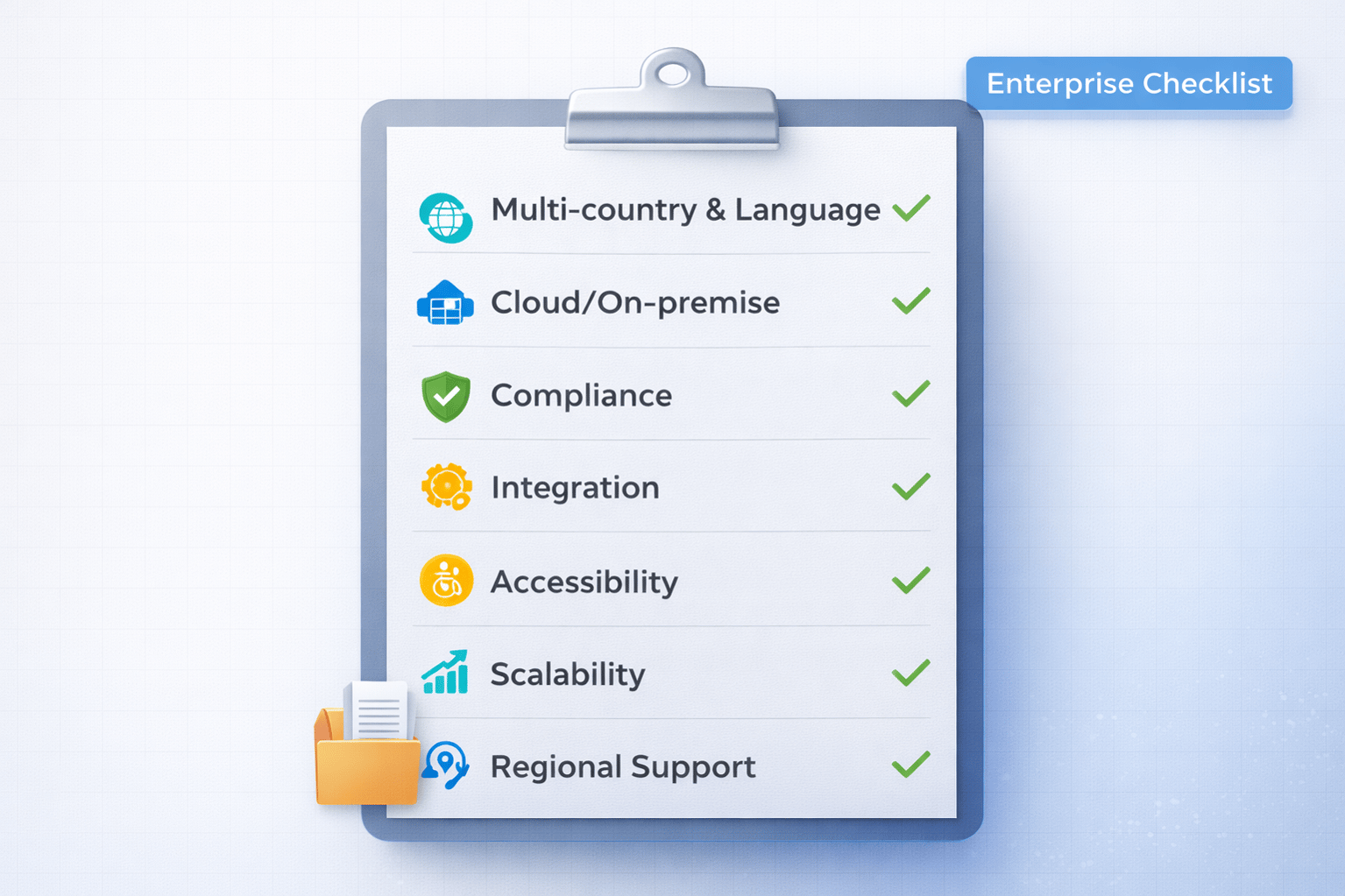
Enterprises should evaluate a LATAM DMS against seven critical criteria: multi-language and multi-country support, cloud versus on-premise flexibility, regulatory compliance tooling, integration with existing ERP/CRM systems, accessibility standards, scalability, and vendor support presence in the region.
Selecting a document management platform for Latin American operations is fundamentally different from choosing one for a single-country deployment. The region's regulatory fragmentation, language requirements, and infrastructure disparities demand a structured evaluation approach. Here are the seven steps every enterprise should follow:
Step 1: Define your document lifecycle scope. Map every document type your organization creates, distributes, stores, and archives across all LATAM offices. Include customer-facing communications (statements, policies, invoices), internal documents, and regulatory filings. Understanding volume and complexity upfront prevents underscoping.
Step 2: Map regulatory obligations by country. Each Latin American country imposes distinct data-protection and document-retention requirements. Brazil's LGPD mandates consent management, data-subject rights, and audit trails. Mexico's LFPDPPP requires immediate breach notification and accountability frameworks. Colombia mandates database registration with the Superintendence of Industry and Commerce (SIC). Create a compliance matrix before engaging vendors.
Step 3: Assess cloud readiness and hybrid deployment needs. While cloud is the dominant model, highly regulated sectors like banking and insurance may require hybrid deployments that keep sensitive data on local servers while using cloud for collaboration and distribution.
Step 4: Evaluate multi-language and multi-channel output capabilities. A DMS serving Latin American operations must generate documents dynamically in both Spanish and Portuguese, with locale-specific formatting for dates, currencies, and addresses. Multi-channel distribution should include email, SMS, WhatsApp, digital portals, and mobile wallet passes.
Step 5: Verify ERP, CRM, and core-system integrations. Validate that the DMS offers pre-built or API-based connectors for your enterprise resource planning, customer relationship management, core banking, or insurance platforms. Poor integration capability is one of the leading causes of DMS project delays.
Step 6: Check accessibility compliance. Evaluate whether the platform generates accessible PDFs that meet PDF/UA standards and comply with the European Accessibility Act. For enterprises with European operations, EU-connected supply chains, or ESG reporting commitments, accessible document output is increasingly non-negotiable.
Step 7: Confirm vendor presence and partner ecosystem in target countries. A vendor's regional footprint directly affects implementation speed, support quality, and long-term reliability. Look for in-region sales and technical teams, local-language support hours, and an established partner network in your target markets.
How Do the Top DMS Providers in Latin America Compare?
The leading DMS providers serving Latin American enterprises differ on deployment model, industry specialization, regional support footprint, and compliance tooling, making direct comparison essential before vendor selection.
No single DMS platform dominates every use case in Latin America. Enterprise buyers should evaluate vendors against their specific requirements rather than relying on global analyst rankings alone. The following comparison highlights verifiable capabilities across four types of providers that commonly appear on enterprise shortlists. Where vendor-specific data could not be independently verified, cells are marked accordingly.
|
Criteria |
DocPath |
OpenText |
Hyland |
Regional/ |
|
Headquarters / LATAM presence |
Madrid, Spain; dedicated LATAM commercial team with offices and partners across Brazil, Mexico, Colombia, Argentina, Chile, Ecuador |
Waterloo, Canada; global offices, LATAM presence through partners and direct sales |
Westlake, Ohio, USA; LATAM cloud via AWS Sao Paulo region since 2021; dedicated LATAM VP |
Varies by provider; typically strong in 1 to 2 countries |
|
Core solution focus |
CCM, CXM, CLM, document automation, PrintPath |
ECM, CCM (Exstream), content services, information management |
Content services (OnBase, Alfresco, Nuxeo), process automation, enterprise imaging |
Often ECM or document workflow for specific industries |
|
Deployment options |
Cloud (SaaS), on-premise, hybrid |
Cloud, on-premise, hybrid, private cloud |
Cloud (Hyland Cloud on AWS), on-premise, hybrid |
Varies; cloud and on-premise common |
|
Key LATAM verticals |
Banking, insurance, retail, manufacturing, government |
Financial services, healthcare, government, energy |
Healthcare, insurance, financial services, government, education |
Typically 2 to 3 sector specializations |
|
Multi-language support |
Yes, dynamic per-document language generation (Spanish, Portuguese, and others) |
Yes, multi-language content management |
Yes, multi-language content handling |
Varies; may be limited to local language |
|
Accessibility (PDF/UA) |
Yes, accessible PDF generation at scale |
Yes, native accessibility compliance in CCM |
[Verify with vendor] |
Varies; often limited |
|
Regulatory compliance tools |
LGPD, GDPR, European Accessibility Act support |
GDPR, HIPAA, SOX, industry-specific frameworks |
HIPAA, SOX, industry-specific compliance |
Typically aligned with local regulations only |
|
No-code / business-user design |
Yes, platform designed for business-user template creation without IT dependency |
Low-code options available |
Low-code application development |
Varies |
A few points of context for evaluating this table. OpenText holds the largest global CCM market share and has been recognized as a CCM leader for eight consecutive years, making it a strong option for enterprises that prioritize scale and depth of ecosystem integrations. Hyland serves over 14,000 organizations worldwide and has invested in LATAM infrastructure through its AWS Sao Paulo cloud region. DocPath differentiates through its no-code design philosophy, which allows business users to create and modify document templates without IT involvement, along with its dedicated LATAM commercial leadership and migration capabilities from legacy platforms.
Enterprises should request live demos, reference customers in their specific industry and country, and conduct proof-of-concept testing before making a final selection.
Which Industries Benefit Most from DMS in Latin America?
Banking, insurance, healthcare, government, manufacturing, and logistics are the leading adopters of enterprise DMS in Latin America, each driven by distinct regulatory, operational, and customer experience requirements.
The adoption of enterprise DMS in Latin America follows the sectors where regulatory pressure, document volume, and customer experience expectations converge.
- Banking and financial services: Banks with large branch networks require distributed document generation and controlled multichannel delivery. Digital onboarding, statement personalization, and real-time contract generation with legally valid digital signatures are top priorities. In 2024, Mastercard data indicated that 72% of digital banking users save time, 59% plan finances better, and 53% access more credit, all outcomes that depend on efficient back-end document processes.
- Insurance: Insurers are digitizing internal processes and strengthening personalized communication with policyholders. The ability to generate and issue a policy at the point of sale, with a digital signature where legally permitted, converts an uncertain application into immediate conversion. In Colombia, insurers such as Equidad Seguros and Solidaria have recently adopted DMS platforms to improve user experience.
- Healthcare: Regulatory documentation demands, patient record management, and compliance with health-data-protection frameworks make DMS essential in LATAM healthcare systems.
- Government: Digital-first mandates across the region are pushing public agencies to automate tax, customs, and citizen-service documents, with Brazil's Nota Fiscal Eletronica (electronic invoice) system serving as a regional benchmark.
- Manufacturing and logistics: Document automation transforms manual processes into efficient workflows, eliminating bottlenecks and improving traceability. DocPath has reported that document automation in logistics can reduce costs by up to USD 500,000 while improving the experience for drivers and end customers.
For real-world examples of how these sectors have implemented DMS solutions, explore DocPath's success stories.
How Do Data-Protection Laws in Latin America Affect DMS Selection?
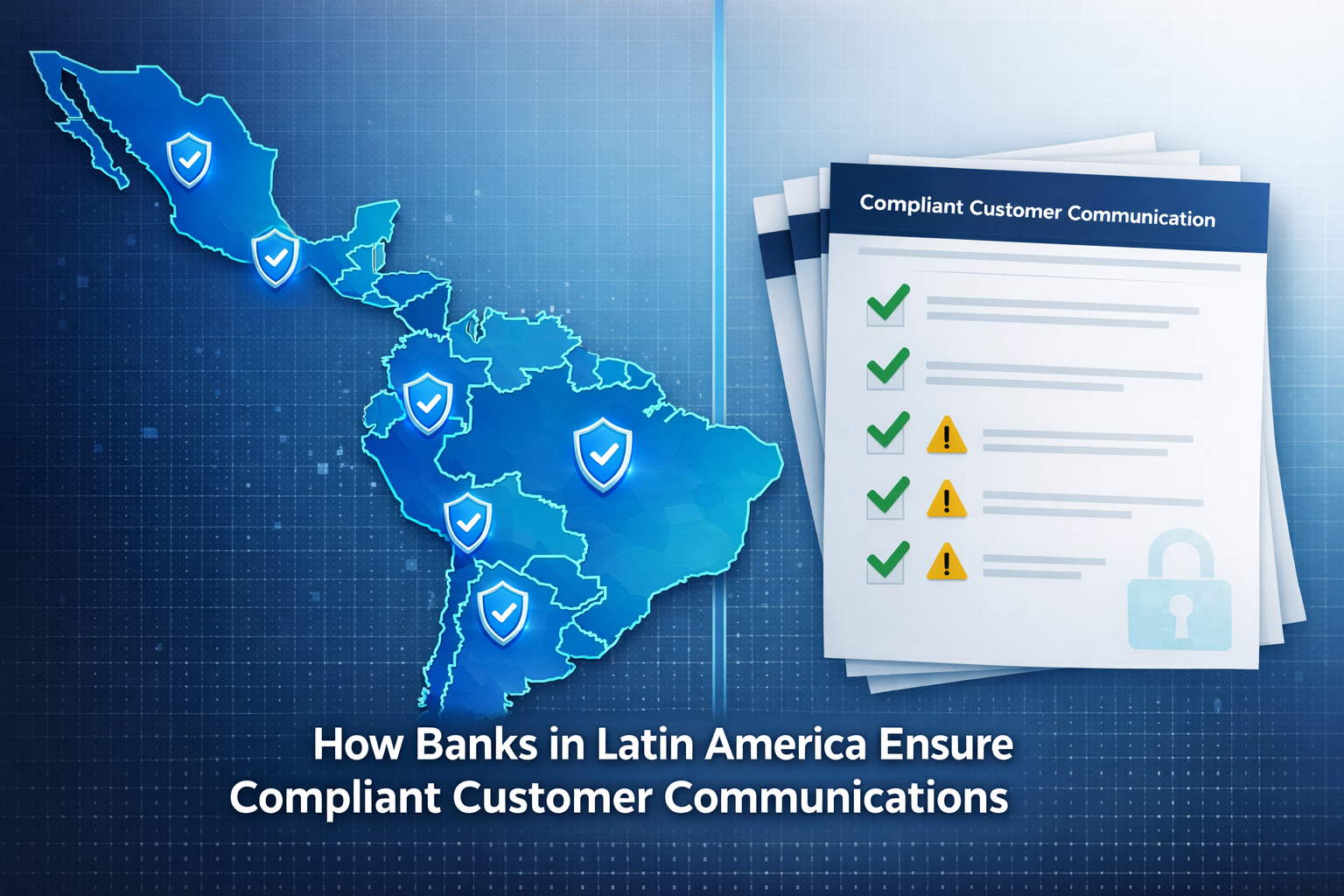
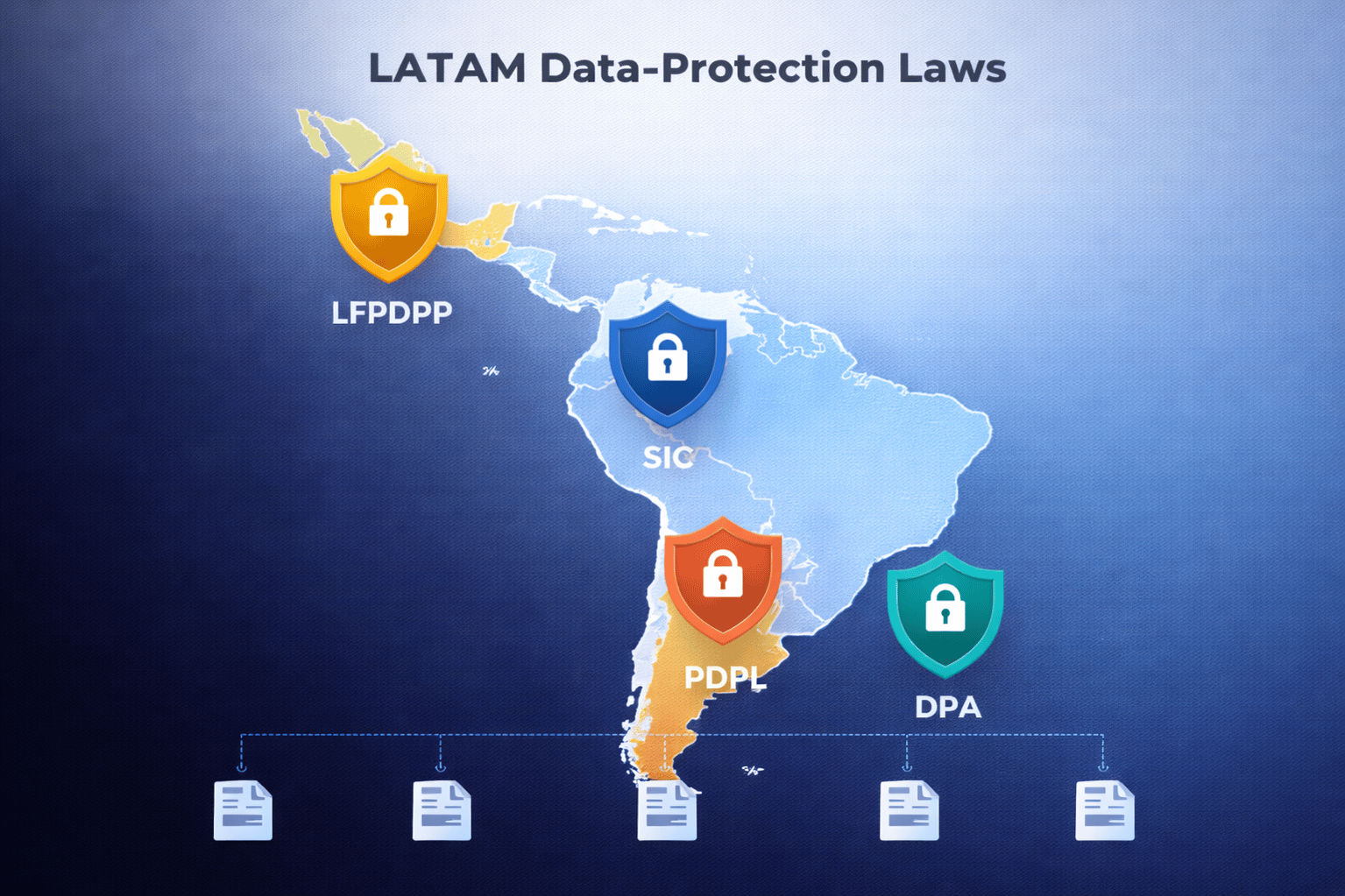
Latin America's patchwork of data-protection laws, including Brazil's LGPD, Mexico's LFPDPPP, Chile's PDPL, Colombia's SIC framework, and Argentina's DPA, requires enterprises to choose a DMS that can enforce consent management, breach notification, cross-border transfer safeguards, and data erasure across multiple jurisdictions simultaneously.
Regulatory compliance is the single most important differentiator when selecting a DMS for multi-country LATAM operations. A platform that meets the requirements of one country may fall short in another, and the consequences of non-compliance are severe. Brazil's LGPD, for example, authorizes fines of up to 2% of the company's revenue in Brazil, capped at R$50 million per violation.
In 2025, multiple jurisdictions introduced proposals and enacted reforms aimed at strengthening consent requirements, expanding individual rights, tightening controls over biometric data, and reinforcing enforcement mechanisms. This means any DMS selected today must be adaptable enough to accommodate regulatory changes that are already in motion.
Brazil (LGPD)
Brazil's LGPD, modeled on the GDPR, mandates data-subject rights including access, correction, and deletion. The ANPD (Autoridade Nacional de Protecao de Dados) enforces compliance, with fines of up to R$50 million per violation. Any DMS processing personal data of Brazilian residents must support explicit consent management, full audit trails, data portability, and safeguards for international data transfers, including standard contractual clauses approved by the ANPD in 2024.
Mexico (LFPDPPP)
Mexico requires immediate breach notification, DPO (Data Protection Officer) appointments, and accountability across both public and private sectors. In 2025, Mexico introduced additional reforms to reinforce prior consent, restrict commercial use of personal data, and strengthen corporate accountability. Enterprise DMS platforms must support ARCO rights (access, rectification, cancellation, and opposition).
Colombia, Chile, Argentina, and Emerging Frameworks
Colombia mandates database registration with the Superintendence of Industry and Commerce (SIC) and requires dedicated DPOs. Chile's newly reformed Personal Data Protection Law aligns closely with GDPR standards and introduces anonymization and pseudonymization requirements. Argentina, which was the first Latin American country to achieve EU adequacy status for data transfers, is updating its 2000-era data-protection law to reflect modern realities. Ecuador and Peru have their own frameworks, and several countries are actively drafting or revising legislation. Enterprises need a DMS that adapts as these frameworks evolve.
For enterprises that need CCM solutions to handle this regulatory complexity, cloud-based SaaS models often provide the fastest path to compliance because the vendor manages infrastructure security and regulatory updates centrally.
Why Does PDF Accessibility Matter for Document Management in Latin America?
Accessible PDF output ensures enterprises reach the estimated 16% of the global population living with a disability, comply with the European Accessibility Act and ESG mandates, and mitigate legal risk, all while expanding the addressable market for customer communications.
An estimated 1.3 billion people worldwide experience significant disability, representing 1 in 6 of the global population. For enterprises generating thousands or millions of customer-facing documents, inaccessible PDFs exclude a substantial portion of the audience and create legal exposure.
The European Accessibility Act, which requires digital documents to be accessible to all users including people with disabilities, affects any organization that serves EU customers, operates within EU supply chains, or has EU-based parent companies. Even for enterprises focused exclusively on Latin American markets, the trend toward accessibility regulation is accelerating.
A critical intersection exists with the GDPR and similar frameworks: because companies cannot ask users whether they have a disability, the only compliant approach is to make all documents accessible by default. This means DMS platforms must be capable of generating tagged, screen-reader-compatible PDFs that meet PDF/UA standards at enterprise scale.
The business case is equally compelling. An Accenture report cited on DocPath's accessibility page notes that people with disabilities around the world have a combined disposable income of USD 8 trillion. DocPath's platform supports accessible PDF generation at scale, using no-code technology that allows business users to create compliant documents without specialized technical knowledge. For organizations with ESG reporting commitments, accessible document output strengthens the social pillar of corporate sustainability performance.
What Are the Biggest Mistakes Enterprises Make When Choosing a DMS in Latin America?
The most common mistakes include treating DMS as a pure IT decision without business-unit input, ignoring country-specific regulatory differences, underestimating integration complexity with legacy systems, and choosing a vendor with no local support presence.
Enterprise DMS selection in Latin America fails most often not because of technology shortcomings, but because of flawed evaluation processes. Here are the six mistakes that appear most frequently:
Mistake 1: Selecting a global DMS with no LATAM localization. A platform built for North American or European markets may lack Spanish and Portuguese language generation, locale-specific date and currency formatting, and awareness of regional regulatory requirements. Without these, the DMS creates more workarounds than it eliminates.
Mistake 2: Prioritizing cost over compliance, risking fines under LGPD or LFPDPPP. The upfront savings of choosing a cheaper, non-compliant platform are quickly erased by penalty exposure. Brazil's LGPD alone authorizes fines of up to R$50 million per violation.
Mistake 3: Overlooking accessibility requirements. Enterprises that ignore accessible PDF generation face growing legal risk, especially those with European operations or ESG commitments. The European Accessibility Act is not optional for companies within its scope.
Mistake 4: Failing to plan for multi-channel output. Many legacy DMS platforms were built for print and email. In Latin America, customer communications increasingly flow through WhatsApp, SMS, digital portals, and mobile wallet passes. A DMS that only supports traditional channels limits engagement.
Mistake 5: Ignoring migration complexity from legacy systems. Enterprises running document workflows on AS/400 mainframes or other legacy platforms face significant migration challenges. Underestimating migration scope, data conversion, and template recreation is one of the leading causes of project overruns.
Mistake 6: Treating DMS as a one-time project instead of an evolving platform. Document management requirements change as regulations tighten, customer expectations shift, and AI capabilities mature. Enterprises should select a platform with a clear product roadmap and ongoing professional services and support.
A 2025 data point underscores the urgency of getting security and resilience right: according to the World Economic Forum's Global Cybersecurity Outlook 2025, 42% of organizations in Latin America lack confidence in their country's ability to respond to major cyber incidents targeting critical infrastructure, compared to just 15% in Europe and North America. This gap makes DMS security and compliance capabilities even more critical for LATAM deployments.
Avoiding these mistakes starts with the right partner. Contact DocPath to discuss your Latin America document management needs.
How Does DocPath Support Enterprise Document Management Across Latin America?
DocPath combines more than 30 years of document automation expertise with a growing LATAM partner network, multi-language document generation, accessible PDF output, and a modular platform spanning CCM, CXM, and CLM, enabling enterprises to deploy across Brazil, Mexico, Colombia, Argentina, Chile, and beyond.
Founded in 1993 and headquartered in Madrid, DocPath has operated in the Latin American market for over 15 years. The company formalized its LATAM expansion strategy in 2024, after three decades of global operation with a consolidated presence in the European Union, Asia, and the United States.
DocPath's solution portfolio includes Customer Experience Management (CXM), CCM as a SaaS, Contract Lifecycle Management (CLM), and PrintPath for high-volume print management. The platform's no-code design philosophy means business users can create, modify, and distribute communications without depending on IT, which translates into faster time-to-market and greater operational agility.
The company's LATAM partner network includes Ricoh, Quality Work, InfoIntelligent, and SGS Team, with solutions currently deployed at major financial institutions across Argentina, Brazil, Chile, Ecuador, and Mexico.
See how enterprises across banking, insurance, and manufacturing trust DocPath. Explore our success stories.
What Will Document Management in Latin America Look Like in 2026 and Beyond?
By 2026, document management in Latin America will consolidate as a strategic pillar of digital transformation, moving from static records to dynamic, predictive, omnichannel content engines adapted to individual client profiles.
DocPath projects that Generation Z will set the pace of technological evolution in 2026, demanding digital experiences that are authentic, visual, and highly personalized. This generational shift requires B2B document management software to become radically more agile and focused on user experience, without compromising security.
One of the most disruptive trends for the coming year is the evolution of document interactions into effective sales channels. Documents will cease to be mere records and instead will power cross-sell and up-sell strategies, integrated across applications, chats, social media, and portals.
The regulatory outlook points to continued tightening. Brazil is advancing reforms on biometric data protections, Mexico is strengthening consent requirements, and Chile's GDPR-aligned reform is taking effect. Enterprises that select a DMS with adaptable compliance tooling today will be better positioned as these frameworks mature.
With the LATAM DMS market on track to reach USD 1,015.8 million by 2030, the investment case for modernizing document management is clear. Companies that move early gain a competitive advantage in customer experience, operational efficiency, and regulatory readiness.
Enterprise DMS Selection Checklist for Latin America
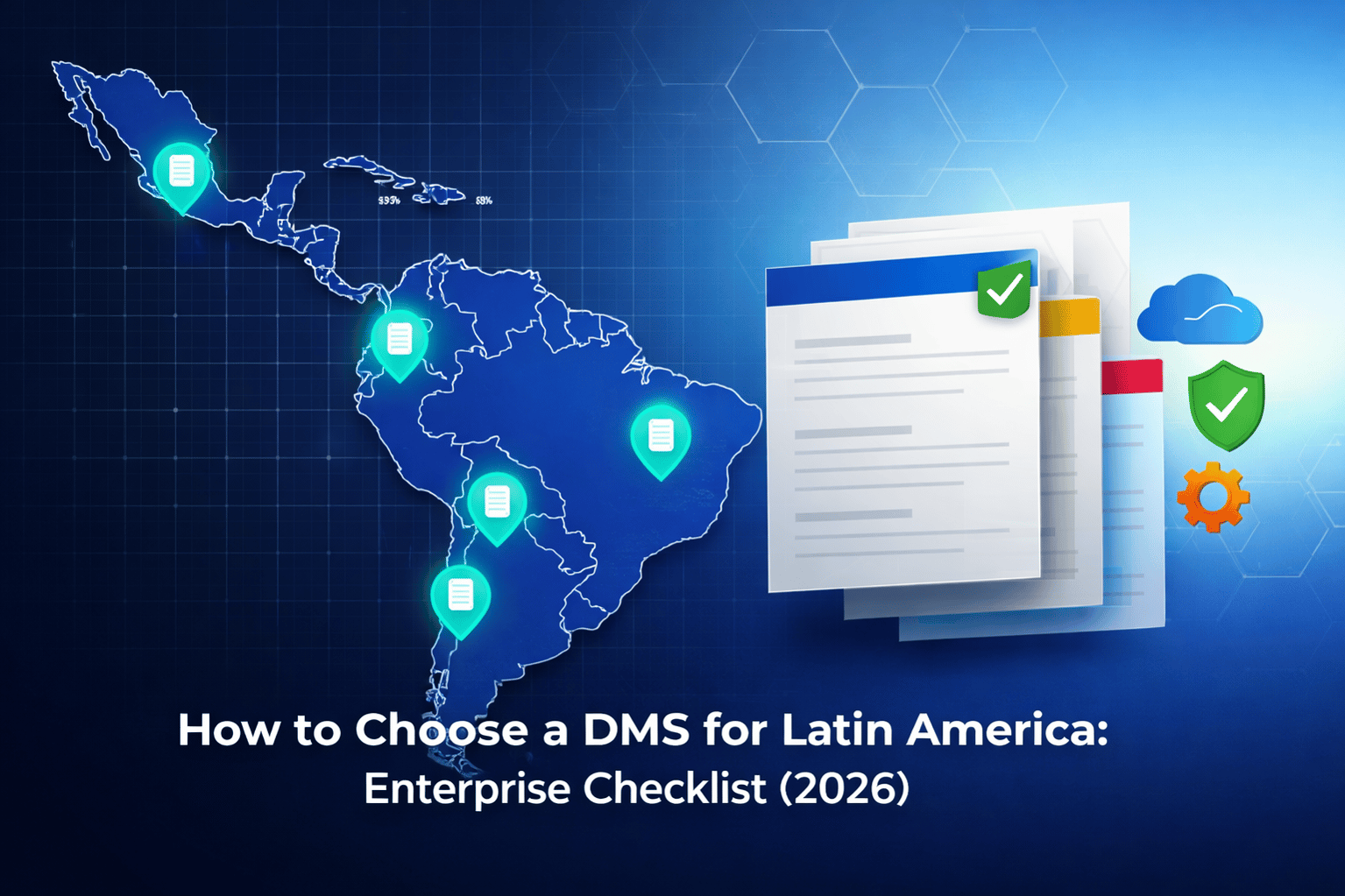
Use this checklist to ensure your document management solution meets the unique demands of operating across Latin American markets.
☐ Multi-language document generation (Spanish, Portuguese, and additional languages as needed)
☐ Cloud, on-premise, and hybrid deployment options
☐ Compliance with LGPD, LFPDPPP, PDPL, and emerging LATAM regulations
☐ Accessible PDF output (PDF/UA, European Accessibility Act)
☐ Integration with ERP, CRM, and core banking or insurance systems
☐ Multi-channel distribution (print, email, WhatsApp, web portals, mobile wallet)
☐ Vendor presence or certified partner network in target LATAM countries
☐ Migration support from legacy systems (AS/400, mainframe, and others)
☐ Scalable licensing model (SaaS or per-seat)
☐ Proven enterprise references in LATAM (banking, insurance, manufacturing)
☐ Ongoing professional services and technical support in local time zones
Ready to check every box? Contact DocPath for a personalized consultation.
Frequently Asked Questions
What is the best document management system for Latin American enterprises?
The best DMS for Latin American enterprises depends on your industry, country footprint, and regulatory requirements. Key features to prioritize include multi-language document generation, compliance tooling for LGPD and other local laws, cloud deployment options, accessible PDF output, and a vendor with proven LATAM presence or a certified partner network.
How much does enterprise document management cost in Latin America?
Costs vary widely based on deployment model (cloud SaaS versus on-premise), document volume, number of users, and integration complexity. SaaS models typically reduce upfront infrastructure costs and scale with usage. Enterprises should request custom quotes from vendors with LATAM-specific pricing rather than relying on global list prices, as regional licensing structures can differ.
Is cloud-based DMS secure enough for regulated industries in Latin America?
Yes, when properly configured. Cloud-based DMS platforms that comply with LGPD, GDPR, and ISO 27001 provide enterprise-grade encryption, access controls, and audit trails. According to DocPath's 2025 data, over 70% of LATAM enterprises have adopted cloud-based DMS, with scalability, remote access, and cost reduction as the primary drivers. However, enterprises should verify their vendor's data-residency options and cross-border transfer safeguards before committing.
What Latin American data-protection laws affect document management?
The primary laws are Brazil's LGPD, Mexico's LFPDPPP, Chile's PDPL (reformed in 2024), Colombia's data-protection framework enforced by the SIC, Argentina's DPA (under revision), and Peru's Personal Data Protection Law. Each imposes requirements around consent, breach notification, data-subject rights, and cross-border transfers that a DMS must support. Enterprises operating across multiple countries need a solution that adapts to each jurisdiction's specific obligations.
How long does it take to implement a document management system in Latin America?
Implementation timelines typically range from a few weeks for a SaaS deployment to several months for on-premise installations requiring legacy-system migration (for example, from AS/400 or mainframe). Factors include the number of document types, integration points, regulatory mapping per country, and user training. Working with a vendor that has LATAM-experienced implementation partners can significantly reduce deployment time.
Can a DMS generate accessible PDFs that comply with the European Accessibility Act?
Some DMS platforms, including DocPath, offer built-in accessible PDF generation that complies with PDF/UA standards and the European Accessibility Act. This is increasingly important for enterprises with European operations or ESG commitments. Accessible PDFs ensure that the estimated 16% of the global population with a disability can interact with business documents. Given that GDPR prohibits asking users about disability status, accessible-by-default output is both a compliance measure and a customer experience advantage.
What is the difference between DMS, CCM, and CXM?
A Document Management System (DMS) focuses on the storage, retrieval, and lifecycle of digital documents. Customer Communications Management (CCM) automates the creation and multi-channel delivery of personalized business communications such as statements, policies, and invoices. Customer Experience Management (CXM) is the broader strategy of orchestrating every touchpoint in the customer journey. Advanced platforms like DocPath integrate all three, enabling enterprises to manage documents, automate communications, and optimize customer experience from a single platform.