Discover how Customer Communications Management (CCM) enhances brand consistency, compliance, and customer experience for enterprise companies. Learn...
How Insurers Automate Policyholder Communications
How do insurers automate policyholder communications at scale? Claims, renewal notices, compliance requirements, and what to look for in a platform.
How Insurers Automate Policyholder Communications
15:00
An insurer's relationship with a policyholder is built almost entirely on paper, even when none of it is printed anymore. The policy document, the renewal notice, the claims correspondence from first notice of loss to settlement letter: each one is a moment where the insurer either reinforces trust or erodes it.
Most insurers still generate these communications from three or four disconnected systems, which means the moments that matter most to a policyholder are also the ones most likely to look inconsistent, arrive late, or contain an error. This guide covers what policyholder communication automation actually involves, why manual processes break down at scale, and the compliance requirements that shape every decision an insurer makes about how it communicates.
Quick Summary: How Do Insurers Automate Policyholder Communications?
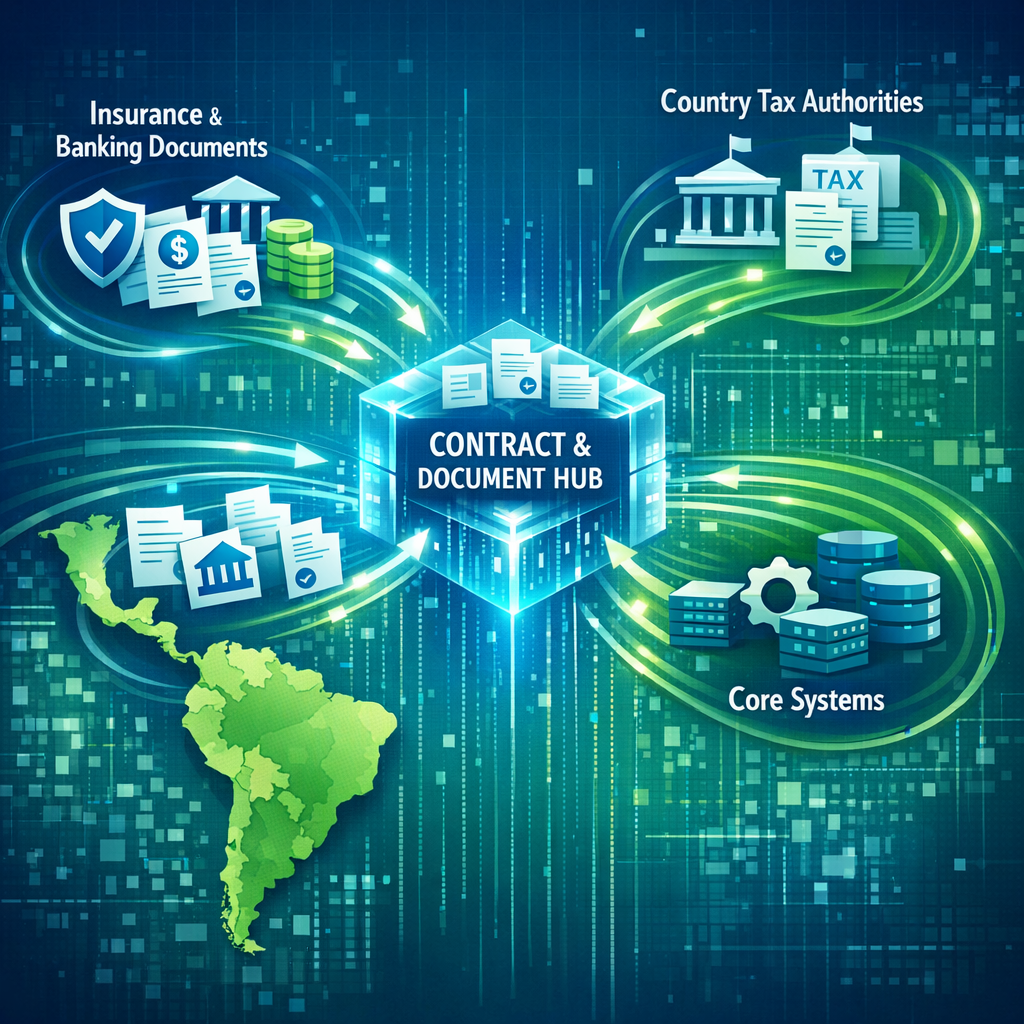
Insurers automate policyholder communications by connecting policy administration, claims management, and CRM systems to a single customer communications management (CCM) platform that generates, personalizes, and delivers every policy document and claims notice across every channel the policyholder uses.
Instead of each system producing its own version of a document, the CCM layer pulls data from all of them, applies one consistent template and brand standard, and routes the finished communication through email, SMS, WhatsApp, digital wallets, print, or certified delivery depending on what the situation and the regulation require.
What Counts as a Policyholder Communication
A policyholder communication is any document or message an insurer sends to a customer over the life of a policy, from the moment it's issued through every renewal, claim, and eventual cancellation or lapse. That includes the policy document itself, declarations pages, renewal and non-renewal notices, premium statements, first notice of loss acknowledgments, claims status updates, settlement and denial letters, and standardized disclosure documents required before a sale completes.
Each of these documents tends to originate in a different system. The policy document comes from policy administration. The claims correspondence comes from the claims platform. The renewal notice might come from a separate billing system entirely. Without a layer that unifies them, a policyholder can receive a professional, on-brand renewal notice one week and a claims letter that looks like it came from a different company the next.
Why Manual Policyholder Communications Break Down at Scale
Manual and fragmented policyholder communication processes break down at scale because the systems generating those documents were built to process transactions, not to manage a consistent customer experience, and every additional handoff between systems introduces a new point of delay or inconsistency. A small book of business can absorb this. A carrier processing tens of thousands of claims a year cannot.
Too Many Handoffs Between FNOL and Settlement
A single claim can pass through intake, adjuster assignment, investigation, and settlement, and at each stage a different system may be responsible for generating the customer-facing letter. Every handoff is a place where the letter's formatting, tone, or turnaround time can slip, and where a delay in generating the letter directly threatens the acknowledgment and status-update deadlines that claims regulations require.
Personalization Without a Unified Data Layer
Claims and policy systems hold rich data about a policyholder: coverage history, prior claims, communication preferences, risk profile. Without a CCM layer that can draw on all of it at once, that data stays siloed inside each system, and communications default to generic, one-size-fits-all templates that don't reflect what the insurer actually knows about the customer in front of them.
Missed Renewal and Cross-Sell Timing
Renewal notices and cross-sell offers depend on precise timing relative to a policy's expiration date. When the system generating the renewal notice can't easily pull real-time data from billing or underwriting, insurers fall back on batch processes that run on a fixed schedule rather than the policyholder's actual timeline, which means renewal notices go out too early, too late, or without the personalized offer that would have made them convert.
What Automation Actually Looks Like
An automated policyholder communication setup connects the following pieces into one workflow instead of leaving them as separate, manually bridged systems.
- Dynamic template design. Business and compliance teams build and update policy, renewal, and claims templates without developer involvement, so a required disclosure change deploys in hours, not weeks.
- Direct integration with policy administration and claims systems. The platform pulls data automatically at each trigger point (issuance, renewal, FNOL, settlement) instead of requiring a manual export and import.
- Multichannel delivery. Print, email, SMS, WhatsApp, digital wallets, and certified delivery are all available from the same generation process, so the channel matches both the policyholder's preference and, where required, the regulation. Certified delivery matters specifically for claims correspondence and denial letters, where proof of delivery has legal weight; see what certified email delivery is and why it matters for customer communications for how that works in practice.
- E-signature and audit trail. Every communication, whether a policy document requiring signature or a claims letter, is logged with a full version history and delivery record.
- Personalization at the point of generation. Coverage details, claims history, and communication preferences feed directly into the document, rather than requiring a separate personalization step after generation.
- NAIC Unfair Claims Settlement Practices Act (US). Most US states have adopted a version of this model act, which sets specific deadlines for claims correspondence: insurers generally must acknowledge receipt of a claim within 15 days, and if an investigation remains open, they must send the claimant a status letter explaining the delay every 45 days until it's resolved. Missing these deadlines because a claims letter is stuck in a manual generation queue is a compliance failure, not just a service issue.
- Insurance Distribution Directive, Directive (EU) 2016/97 (EU). The IDD requires insurers and distributors to give customers standardized pre-contractual disclosure documents before a policy is sold: an Insurance Product Information Document (IPID) for non-life products, or a Key Information Document (KID) for insurance-based investment products. These documents follow a fixed format, which makes them a natural fit for template-driven generation rather than manual assembly.
- DORA, Regulation (EU) 2022/2554 (EU). DORA applies to insurance and reinsurance undertakings, not only banks. In force since January 17, 2025, it requires covered entities to manage ICT risk and maintain operational resilience across the technology stack supporting critical functions, which includes the platform generating policy and claims communications.
- GDPR (EU) and LGPD (Brazil). Claims files routinely contain sensitive personal data, including health and financial information tied to a claim. Both regulations require organizations to maintain records of how that data is processed, which means the CCM platform generating claims correspondence needs its own audit trail rather than relying on the claims system's internal logs.
- Accessibility requirements. Insurers selling policies through e-commerce channels in the EU fall under the accessibility provisions of the European Accessibility Act (Directive (EU) 2019/882), enforced since June 28, 2025. Policy documents and disclosures generated as PDF/UA-compliant output meet this requirement by default instead of needing a separate remediation pass.
Insurers that need policyholder communications, contract management, and broader customer experience working from the same underlying data are increasingly consolidating all three rather than running them as separate systems; that shift is covered in more depth in unifying CCM, CLM, and CXM into one governed document stack.
Compliance and Regulatory Considerations for Policyholder Communications
Policyholder communications carry compliance obligations that go beyond general data protection law, because claims correspondence and pre-contractual disclosures are subject to specific timing, content, and format requirements set by insurance regulators. An automation platform has to be built to meet these requirements by default, not adapted to them after the fact.
The pattern across all of these is the same: the deadlines, formats, and disclosure content aren't optional add-ons to a policyholder communication, they're the substance of what makes the communication compliant, so the platform generating it has to enforce them at the point of creation.
How to Evaluate an Automation Platform for Policyholder Communications
- Does it integrate directly with your policy administration and claims systems, or does it require manual data handoffs at each stage?
- Can business and compliance teams update templates themselves, without submitting a ticket for every disclosure change?
- Does it support the channels your policyholders actually use, including certified delivery for claims and denial letters?
- Is compliance built into generation, including claims-deadline tracking, standardized disclosure formats, and accessible output?
- Does it provide a complete audit trail covering both the document version and the delivery record?
These evaluation criteria overlap closely with the broader document management decision insurers face; a fuller checklist covering the LATAM context specifically is available in how to choose a DMS for Latin America: enterprise checklist (2026).
How DocPath Supports Policyholder Communications at Scale
DocPath is used by insurers to automate the full range of policyholder communications, from policy issuance through claims correspondence, connecting directly to policy administration and claims platforms without requiring changes to their configuration.
LexisNexis Risk Solutions, which supports the insurance industry with high-volume data and document operations, has used DocPath since 2014 to generate more than 15 million documents a year, roughly 50,000 a day, combining PDF and large-format output for its data operations. QBE migrated 6,000 forms onto DocPath without rewriting a single core application, completing the deployment in days rather than months and giving its legal and marketing teams the ability to build and adjust dynamic, data-driven forms directly.
DocPath's platform covers template design, multichannel delivery including certified email and digital wallets, e-signature, and full audit trail, all built to support the claims-deadline and disclosure requirements insurers operate under. It's certified under ISO 9001, ISO 27001, and SOC 2, and deploys on-premises or in a private cloud so policyholder data never leaves the insurer's own environment.
Frequently Asked Questions
What is the biggest bottleneck in policyholder communications?
The most common bottleneck is the handoff between systems: policy administration, claims management, and CRM each generate their own version of a customer-facing document, and every handoff between them introduces a delay or an inconsistency. Automation removes the handoff by connecting all three systems to a single communication layer.
How does automation help insurers meet claims correspondence deadlines?
Most US states require insurers to acknowledge a claim within 15 days and send status updates on open investigations every 45 days. An automated CCM platform generates and sends these letters directly from claims system triggers, which removes the manual queue that causes deadlines to slip.
Do policyholder communication regulations differ by region?
Yes. The US applies claims-timing rules through state adoptions of the NAIC model act, the EU requires standardized pre-contractual disclosures under the IDD along with DORA's operational resilience requirements, and Brazil applies LGPD's data processing requirements to any personal data included in a claim. An automation platform needs to support all of these simultaneously if an insurer operates across regions.
Can smaller insurers benefit from CCM automation, or is it only for large carriers?
Any insurer generating policyholder communications from more than one system benefits from automation, because that's where inconsistency and compliance exposure start to appear. The larger the claims volume, the more measurable the cost of not automating, but the underlying problem, disconnected systems producing inconsistent communications, exists at any scale.
Is Your Organization Ready for CCM?
Every gap covered in this guide, disconnected systems, missed claims deadlines, inconsistent disclosures, comes down to the same underlying question: how fragmented is your current communication setup? DocPath's CCM Readiness Checklist walks through 10 direct yes or no questions covering template ownership, IT dependency, version tracking, and how long compliance updates take to deploy, so you can score your organization in a few minutes.